Why Apple Remains One of the Strongest Brands in the World: iPhone, Services, and AI Strategy [eng]

Why Apple Remains One of the Strongest Brands in the World
An English company-analysis version covering the iPhone, services, ecosystem strength, competitors, AI strategy, and valuation checkpoints.
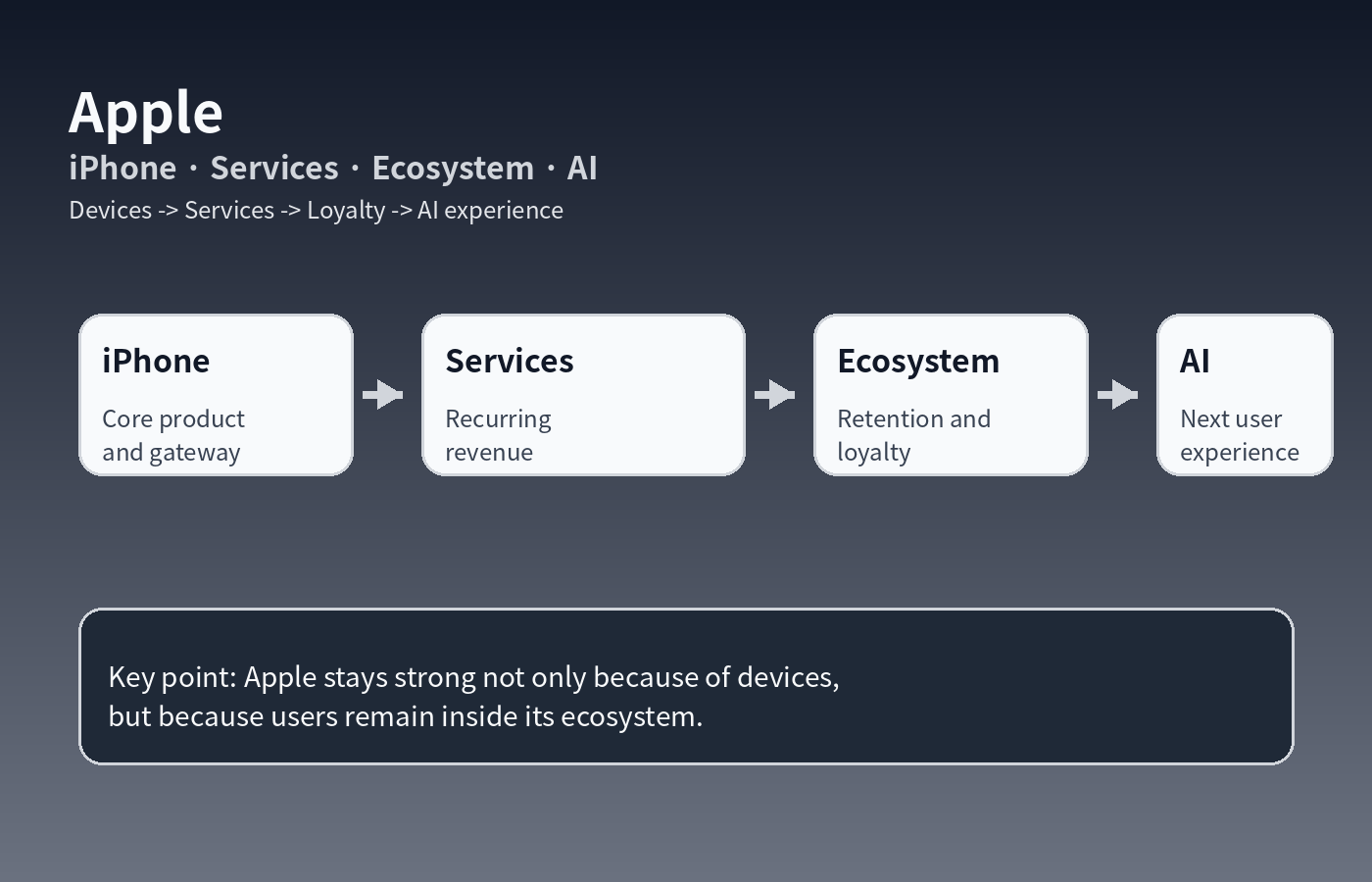
- Apple is not just a smartphone company. It is an ecosystem company built on hardware, software, services, and brand power.
- The key point is not only how many iPhones Apple sells, but how strongly the iPhone anchors the wider ecosystem.
- For investors and readers, the important angles are brand power, services growth, AI strategy, and valuation pressure.
One-line summary and company overview
Apple is one of the most recognized technology companies in the world and consistently ranks near the top in global brand value.
Business structure
Apple’s business structure can be divided into the iPhone, Mac, iPad, wearables, and services.
Key products and core pillars
The iPhone is still the company’s signature product, but Apple’s real strength is not just the phone itself.
Competitor comparison
Apple’s competitors differ by segment. In smartphones, Samsung Electronics is the clearest direct comparison.
Strengths
- Exceptional brand power
- Strong ecosystem stickiness
- Growing services base
- Premium pricing power
- Massive cash generation
Weaknesses and risks
- iPhone dependence
- Mature smartphone market
- Regulatory pressure
- AI expectation risk
- Valuation pressure
Financial and valuation checkpoints
When reading Apple, it is not enough to ask whether revenue grew.
Current industry trends and Apple’s position
The biggest theme in big tech right now is clearly AI.
Conclusion
Apple remains powerful not just because the iPhone is popular, but because the company combines brand, ecosystem, services, premium positioning, and shareholder returns in a way very few companies can match.
Beginner questions investors often ask
Is Apple only an iPhone company? No. The iPhone remains the main gateway, but Apple also earns recurring revenue from services such as the App Store, iCloud, AppleCare, subscriptions, payments, and digital content. A stronger services mix can make earnings less dependent on one hardware cycle.
Why does AI matter for Apple? Apple’s AI story is less about selling AI chips to data centers and more about making the iPhone, Mac, and iPad more useful. The key question is whether AI features give users a real reason to upgrade devices or stay deeper inside the Apple ecosystem.
What should beginners not misunderstand? A strong brand does not remove valuation risk. Apple can remain an excellent company while its stock still reacts negatively if iPhone demand, services growth, China sales, or regulatory news disappoints.
What to watch next
- iPhone unit demand and average selling price
- Services revenue growth and margin stability
- China and emerging-market competitive pressure
- Whether AI features create a visible upgrade cycle
- App Store regulation and its impact on services economics
Public sources used
This explainer is based on Apple Investor Relations materials, annual reports, quarterly earnings releases, and official product announcements. For comparison, readers can also review our Nvidia explainer and Alphabet explainer.
Beginner example: why the ecosystem matters
Imagine a user who owns an iPhone, Apple Watch, AirPods, iCloud storage, and several paid apps. Even if another smartphone looks attractive, switching means moving photos, messages, subscriptions, accessories, and habits. This is why Apple’s ecosystem can protect customer loyalty. The investment question is not only whether Apple sells one more phone this year, but whether users remain inside the ecosystem for many years.
That ecosystem also explains why services are important. A device sale may happen once every few years, while cloud storage, app purchases, warranties, and subscriptions can continue. For beginners, this distinction between hardware cycles and recurring services is one of the most useful ways to understand Apple.
How to read Apple earnings step by step
Begin with iPhone revenue because it is still the main entry point into Apple’s ecosystem. Then look at services revenue, because services show whether existing users continue to spend money after buying the device. A healthy Apple story usually needs both: resilient device demand and recurring services growth.
Next, check regional trends. China is especially important because it is large, competitive, and sensitive to local consumer sentiment. Emerging markets can also matter if Apple finds ways to expand premium-device demand without damaging its brand positioning.
Finally, watch free cash flow and shareholder returns. Apple is not only a product-launch story; it is also a cash-generation story. Strong cash flow gives the company room for buybacks, dividends, research and development, and long-term platform investment.
Editorial basis and investment caution
This article is an educational explainer based on publicly available company and industry materials. It is not a buy or sell recommendation and does not promise any investment outcome. Before making decisions, readers should review the latest earnings releases, filings, company disclosures, market conditions, and their own risk tolerance.
Editorial basis and how to read this article
This article is based on publicly available company materials, filings, earnings releases, official announcements, market data, and news context. It is written as a plain-language explainer, not as a short-term price prediction. It is for education and information only and is not a buy or sell recommendation.
Reader checklist
- Check the date and source of key numbers.
- Compare headlines with actual earnings, filings, and market data.
- Look for both growth drivers and risks.
- Separate the business model from the stock narrative.
- Review the next earnings release or official update before making your own decision.